Where automation ends and judgement begins
First published in Italian: original on ElectroYou · The English version of this series is also published as articles on our LinkedIn page — follow on LinkedIn
On a residential building, the engineering decisions take an afternoon.
How many outlets and lights in each room, how they group into circuits, how each room is switched, where the panel sits — a few hours of judgement from someone who has done it before.
Then the drawings and the bill of quantities take weeks.
Not because they are hard. Because every one of those decisions has to be carried by hand through the whole set: every symbol drawn and tagged, one by one, the cable routes traced along the walls, panel schedules typed out, the load balance and the voltage drops worked through, every quantity counted at the end.
And that is only the apartments. Then come the corridors and the staircases, the common areas, the parking — each with its own panel, its own circuits, its own lighting, and the emergency lighting on top. Hours per sheet, days per floor, weeks per building.
None of that is engineering. It is the consequence of engineering, written out longhand.
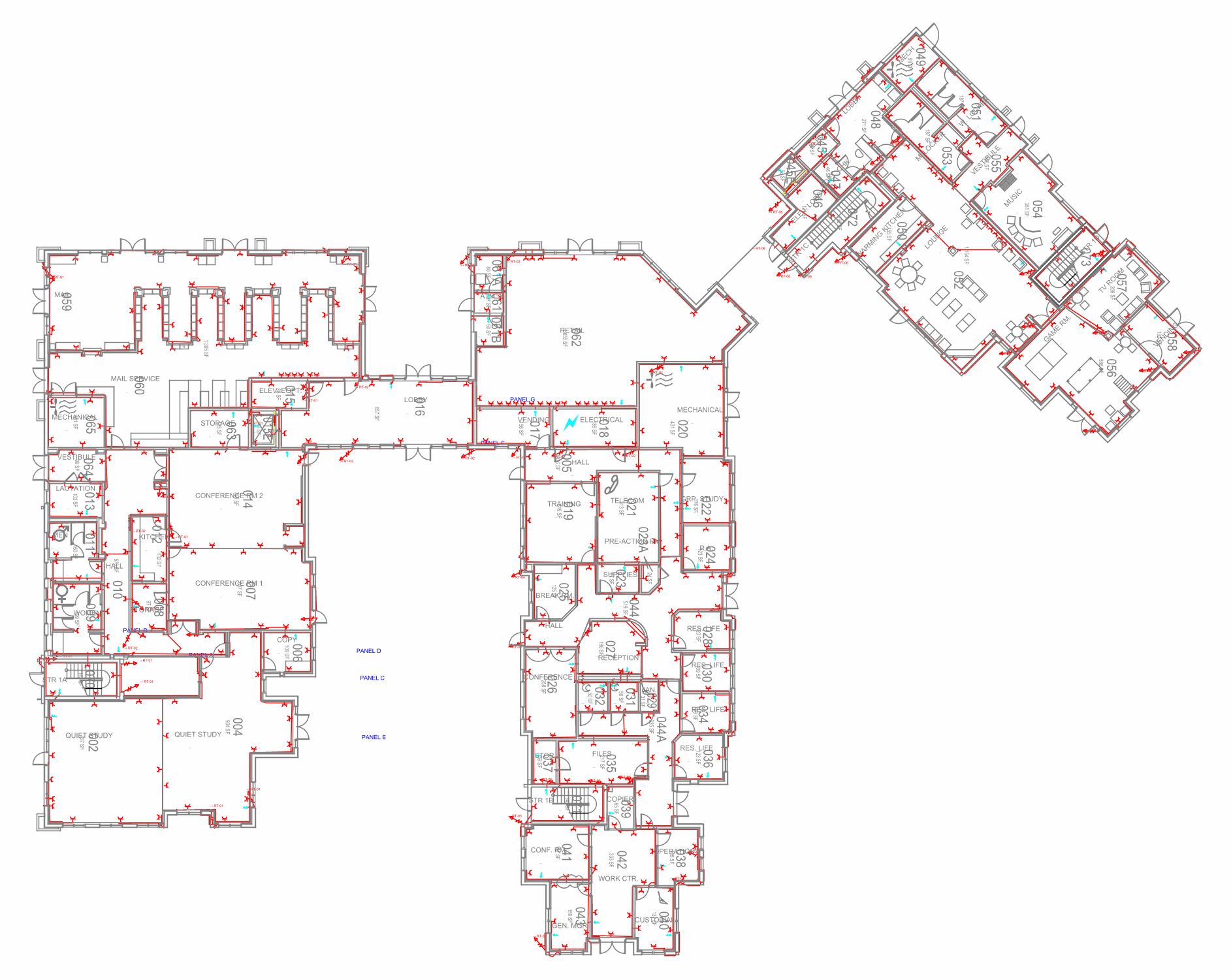
And that is exactly what is worth automating — the consequences, never the decisions. Once the points and the circuits are settled, the load balance, the voltage drops, the conductor sizes, the protective devices, every sheet and every line of the bill of quantities follow from them by rule — derived in minutes, and never miscounted on the fortieth sheet.
The afternoon of judgement stays with the engineer. The weeks of transcription do not have to exist.
Where do you draw that line — what would you let be derived, and what would you never hand over?
Whoever writes this does not sign the projects: the standard and the signature stay with the engineer who signs. This is only about method.